Full Roof Replacement Done Right in Taylors SC
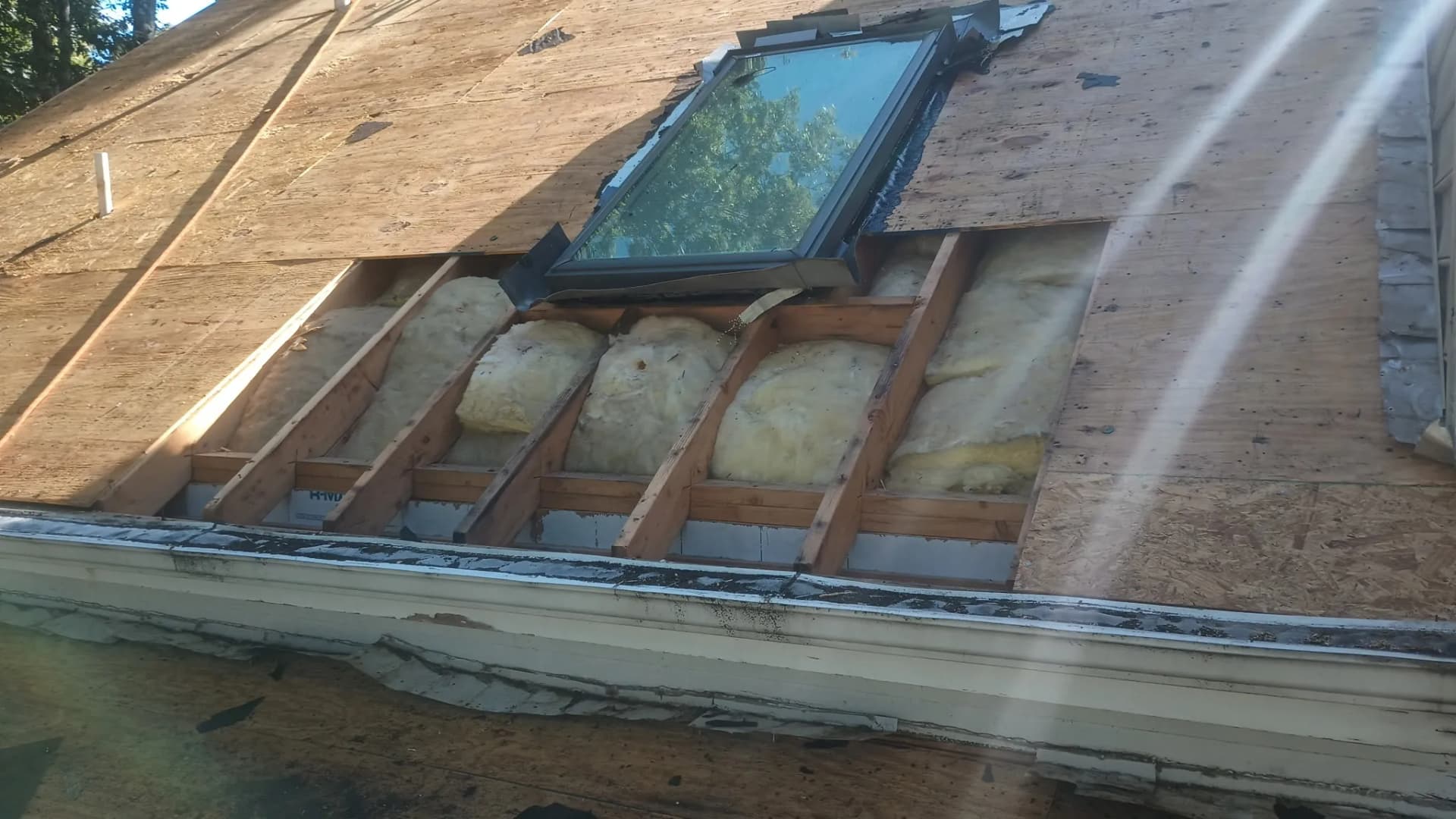
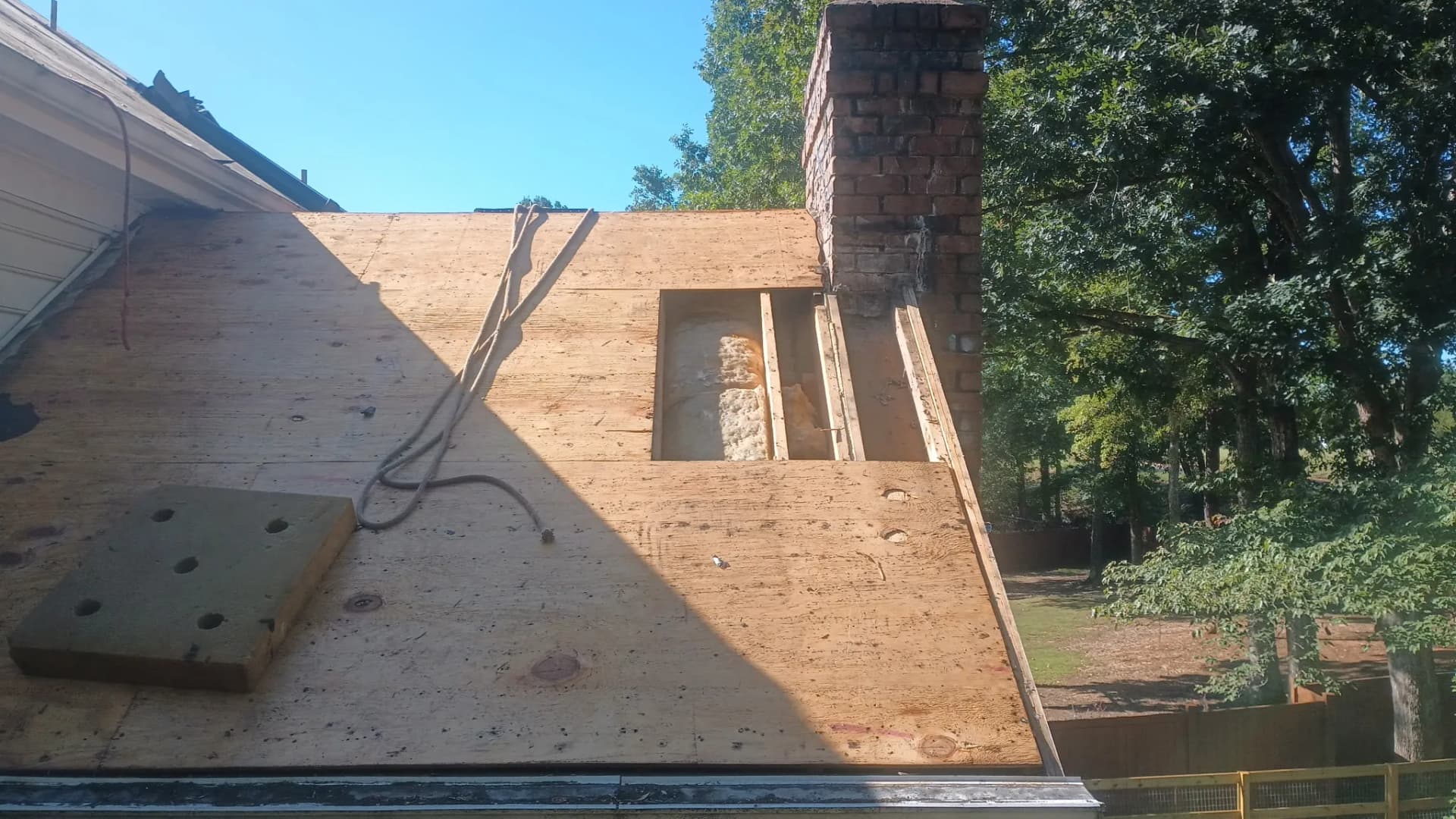
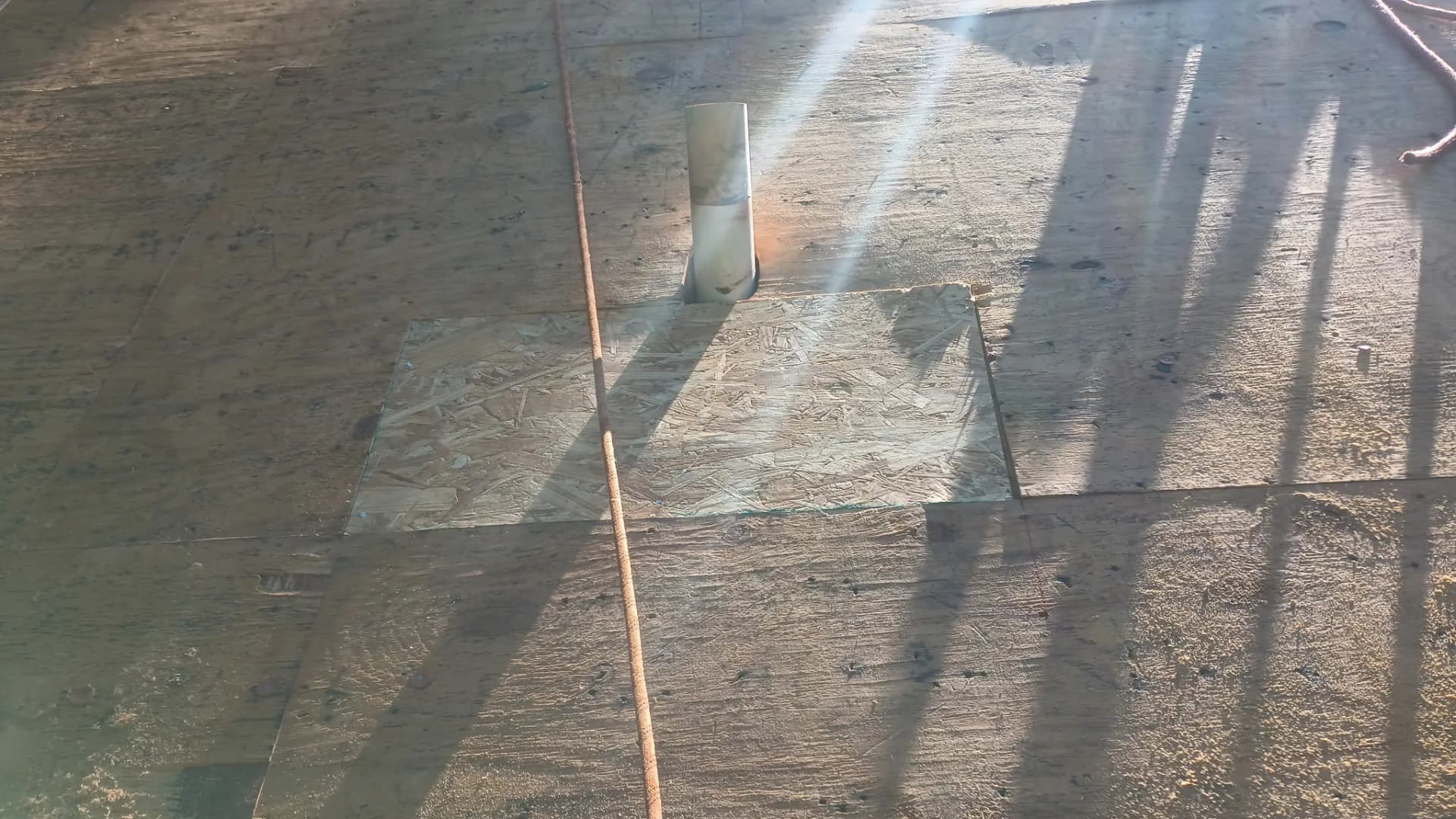
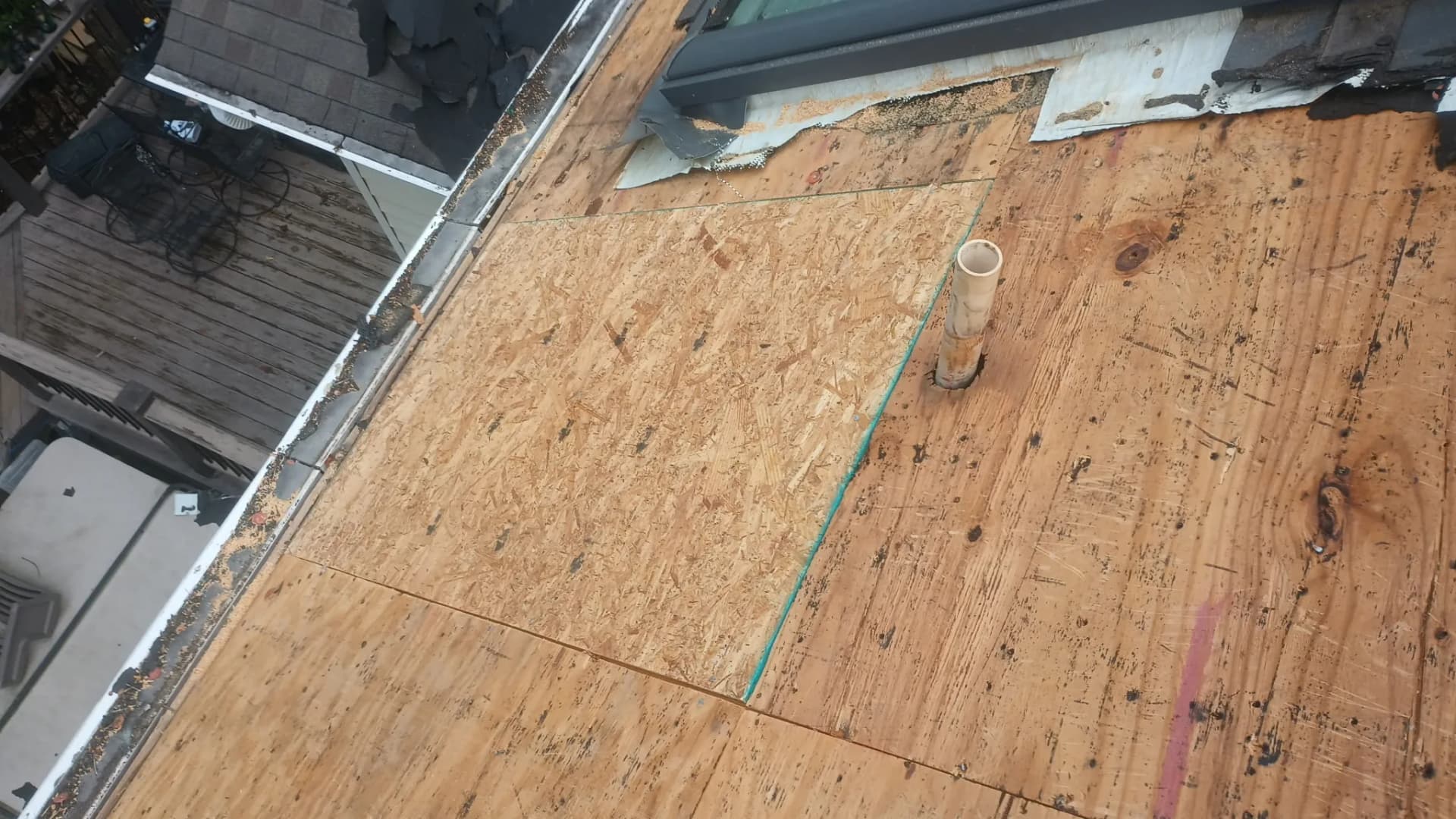
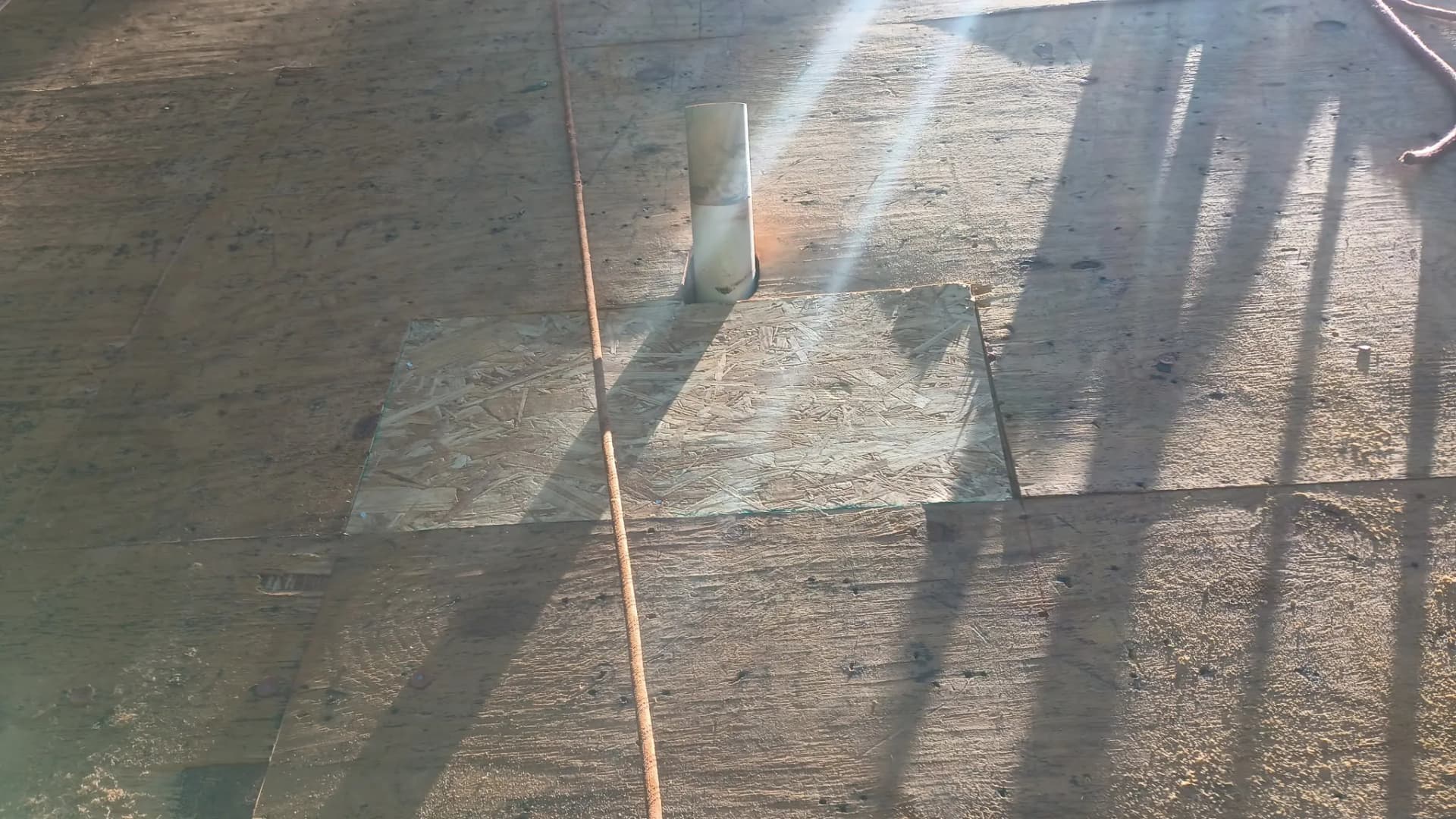
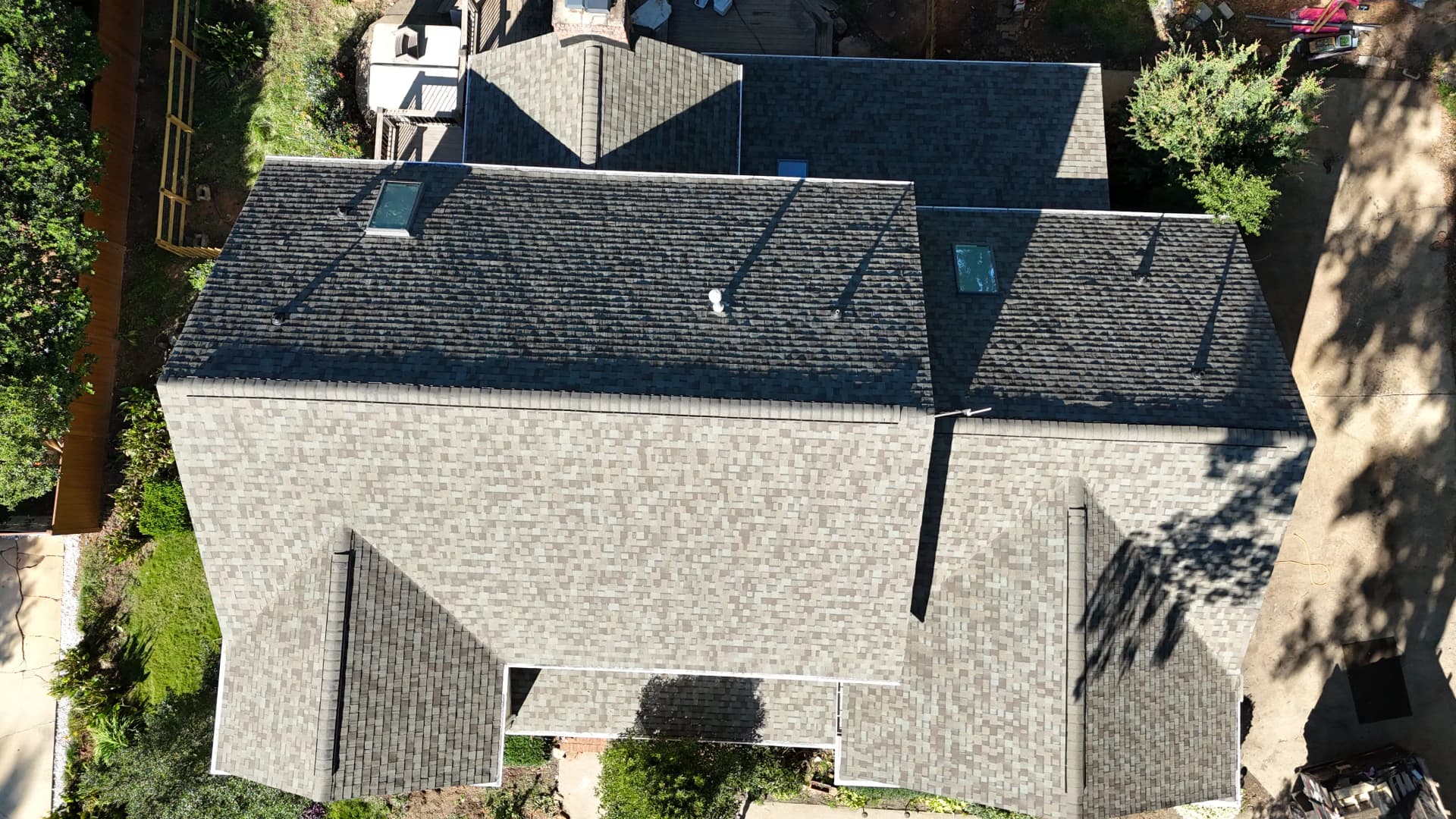
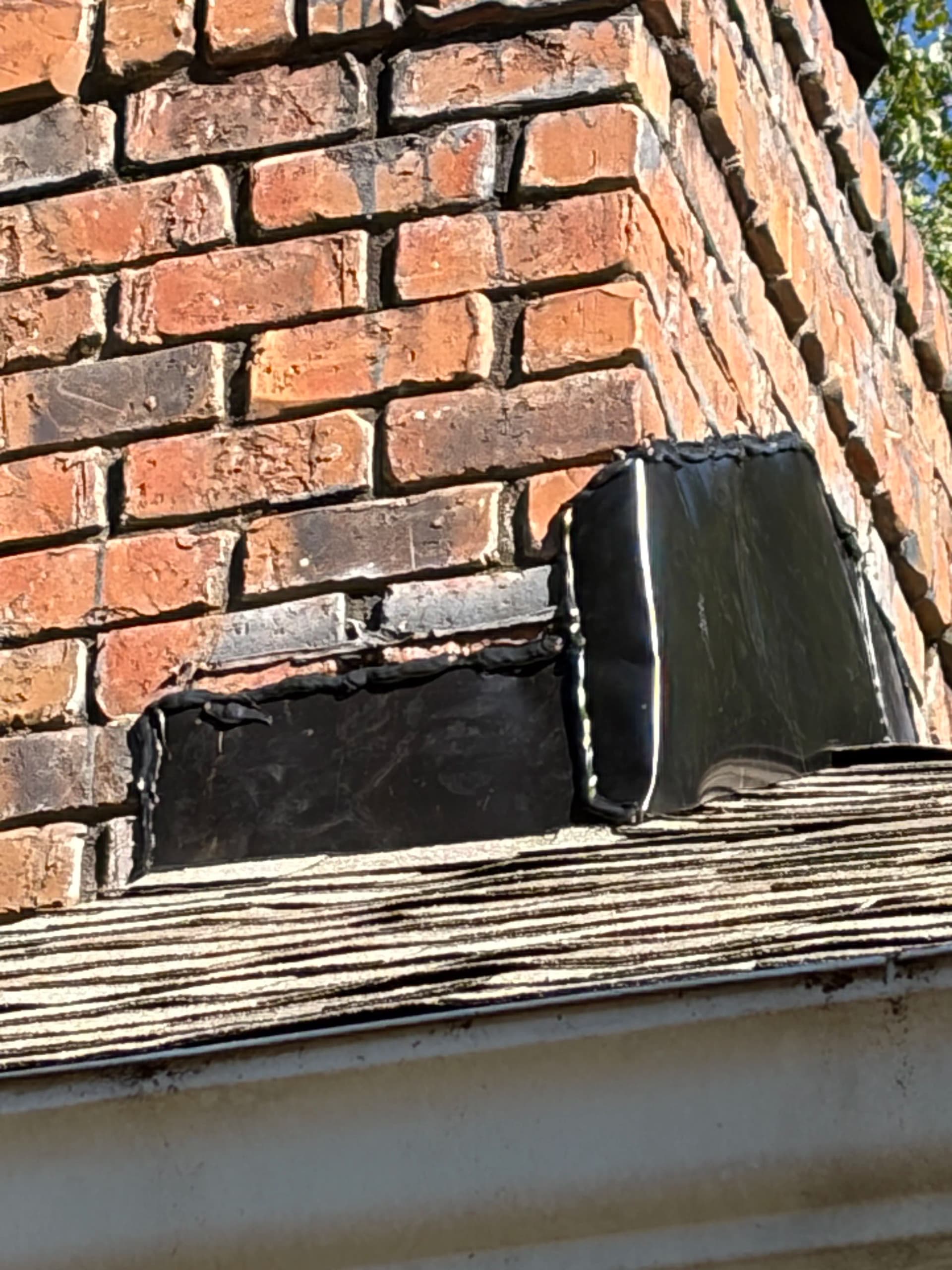
Most roofs look fine from the street. That's the problem. When we strip everything back down to the decking on a full replacement, we find out what's actually going on - and what we found on this Taylors home is exactly why we don't skip that step. Rotten decking at the eaves, worn-out flashing around the chimney, and areas near the skylights and pipe penetrations that had been holding water for who knows how long.
Here's the thing about problem spots like chimneys, skylights, and pipe boots - they're the most common places leaks start, and they're also the easiest to ignore during a basic re-shingle job. We don't do basic. Every penetration got properly addressed. Rotten decking was cut out and replaced with fresh material. New flashing went in where the old stuff had failed. Ice and water barrier was installed in the high-risk areas to give this roof a real fighting chance long-term.
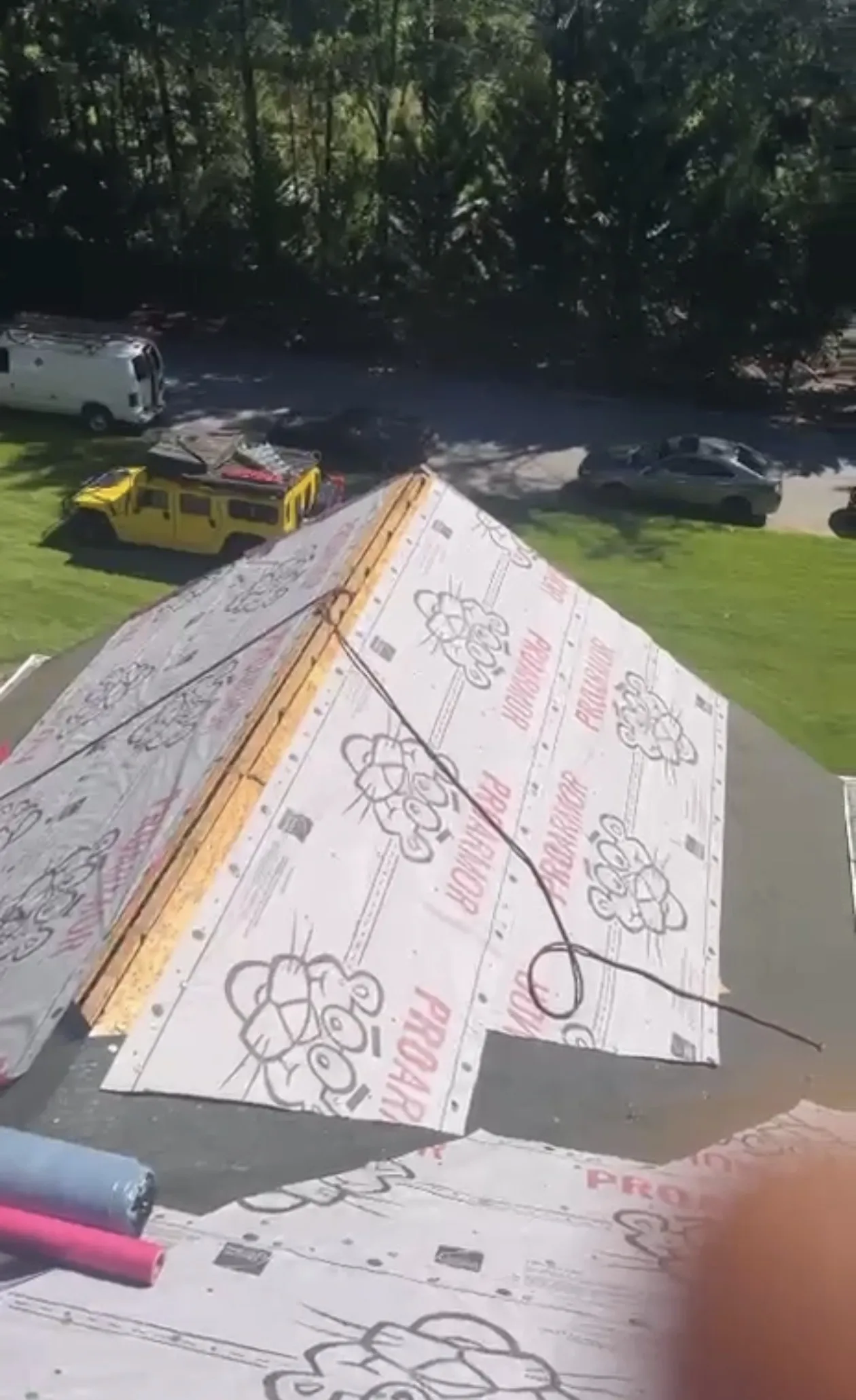
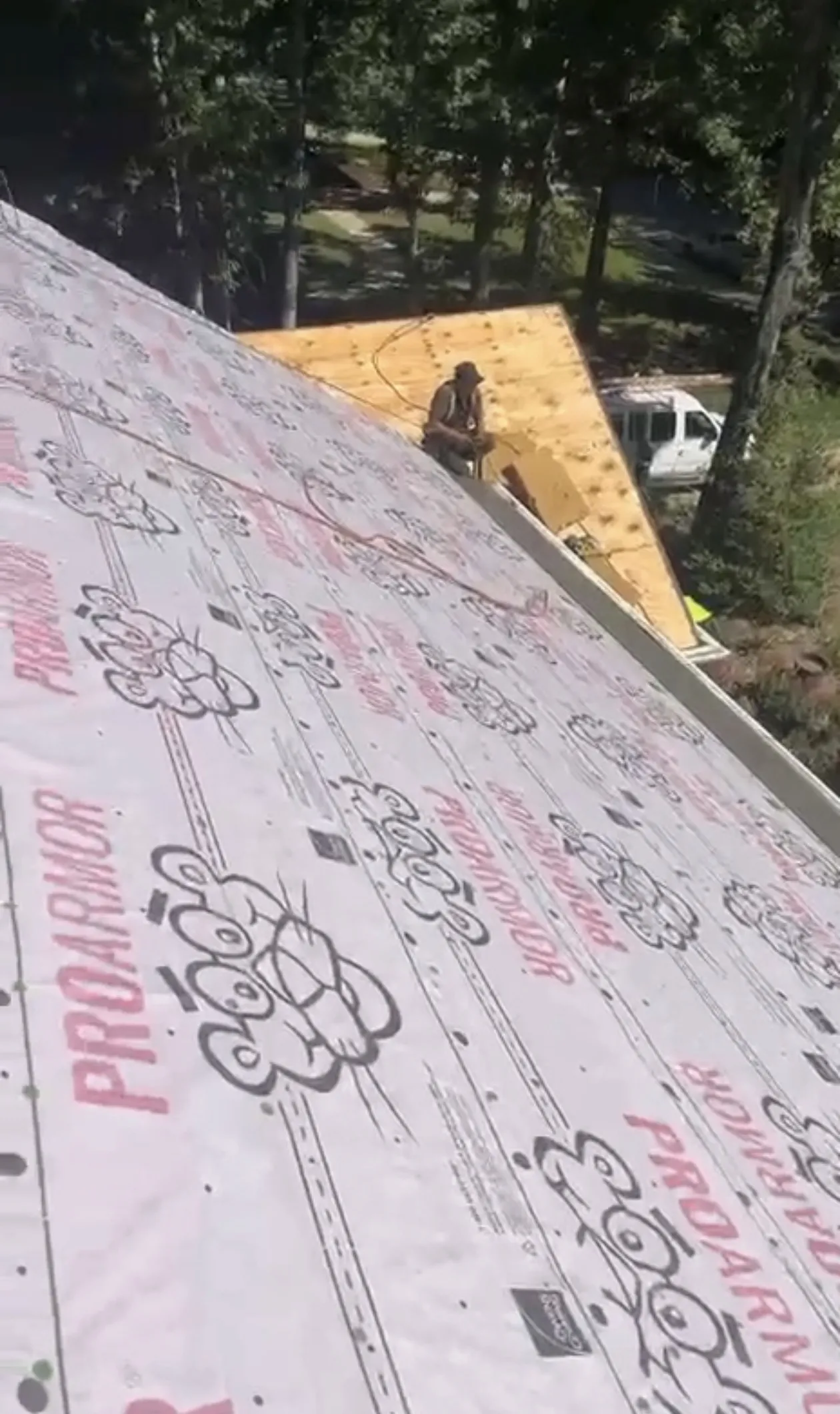
Once the decking was solid and all the critical details were handled, we laid down ProArmor synthetic underlayment across the entire field. That's your secondary layer of protection - the line of defense between your home and the elements if water ever gets under a shingle. It's one of those upgrades that a lot of homeowners don't even know to ask about, but it matters.
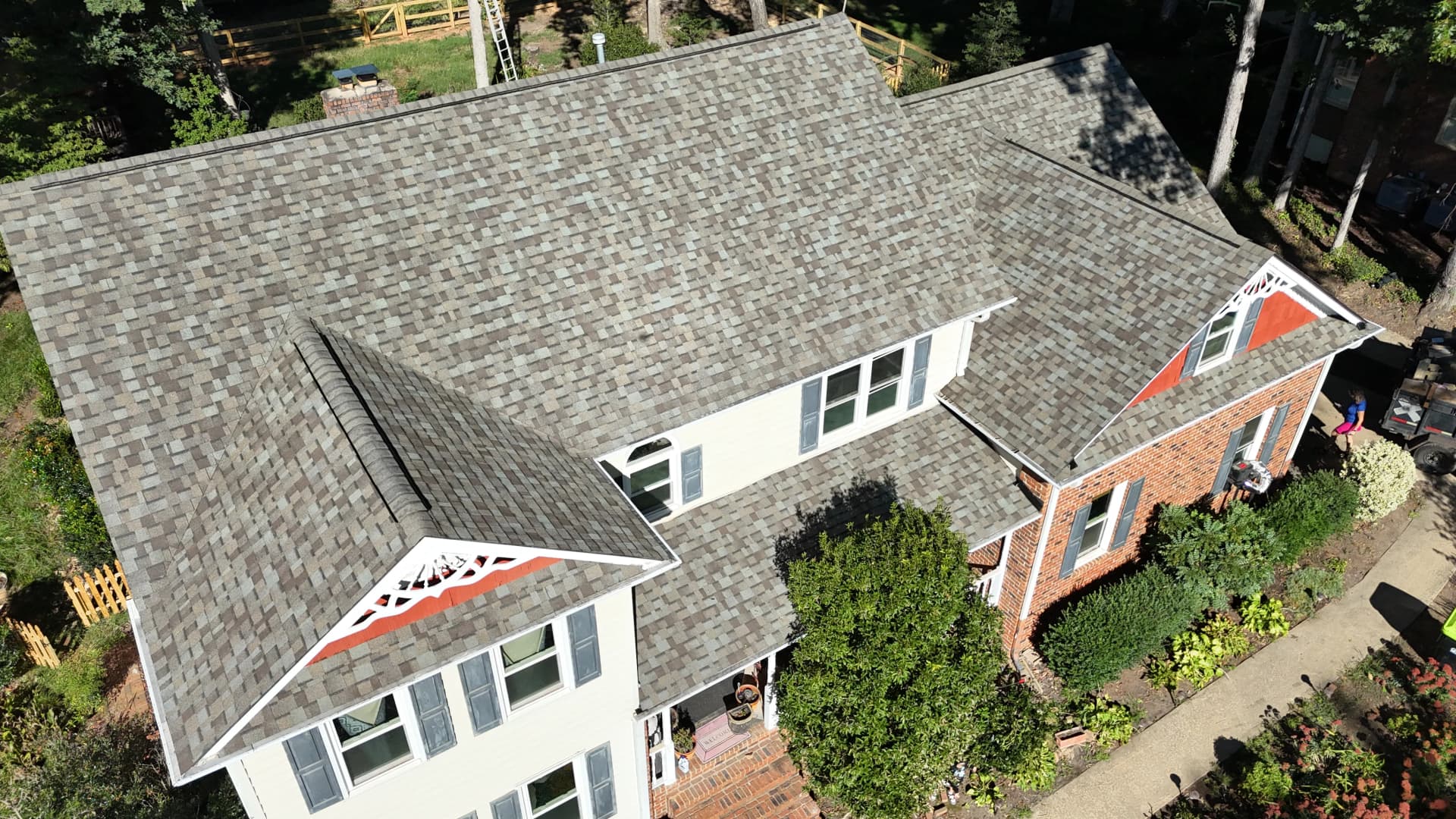
We finished everything off with Owens Corning Duration shingles in Driftwood. The color works beautifully with the brick exterior and the white trim on this home. From the drone shots, you can see how clean and uniform the finished roof looks across a fairly complex roofline - multiple slopes, skylights, a chimney, the works. Getting a roof like this to lay perfectly takes a crew that knows what they're doing.
This is what a new roof installation is supposed to look like - not just new shingles slapped over old problems, but a complete system done from the deck up. Every layer matters. Every detail at the transitions and penetrations matters. That's how you get a roof that actually lasts.